Catégories
Bookkeeping

Expense Management

In this blog post, we’ll explore how you can harness the capabilities of Xero to enhance your budgeting and forecasting processes. However, with the right tools and strategies, budgeting and forecasting become more manageable and insightful. While Xero’s standard budgeting capabilities serve basic financial planning requirements, growing organizations often need more advanced functionality to accommodate increasing operational complexity.

Consistent budgeting takes work, but pays off tremendously in achieving financial aims. If your forecast shows you are way off meeting your budget, you can course correct by cutting expenses or changing financial allocation. The key is regularly monitoring your budgets and using them to guide business decisions. Xero makes this simple by allowing you to model your budgets based on historical averages. Xero offers user-friendly tools to set budgets by department, tracking category, or project. With Xero’s powerful tools, small businesses can stay organized and confident.

  • Teams can establish direct connections between budgets and business drivers such as workforce levels or sales volume, generating models that automatically adapt as foundational assumptions evolve.
  • However, its range of out-of-the-box templates is narrower than other Xero budgeting add-ons covered here, and deeper customization may be limited.
  • Historical data can help you identify seasonal changes in your cash flow, like when you can expect recurring income or expenses.
  • This capability is essential for identifying trends and making necessary adjustments to ensure your business stays on course.
  • You can start with a spreadsheet, but it can be time-consuming and prone to errors.
  • Make informed, data-driven business decisions to improve your financial health.
  • Ready to see your future cash flow?

Key takeaways

Inconsistent categorization undermines budget vs actual accuracy. Zoho Books offers budgeting and expense analytics within the broader Zoho ecosystem. Mid-market companies that want forecasting depth without enterprise complexity.

Stick to your budget for a few months, tracking actual spending. Creating and managing a budget is key to financial success. This supports data-driven decisions to reach your business growth and profit goals. Checking your Xero forecast against your budget on a regular basis is crucial. As the period progresses, you can run budget reports to compare actuals vs. budget. Under Select Budget, click on Add New Budget to create your budget.

  • Xero, a leading cloud-based accounting software, offers powerful features tailored to help small businesses optimize their financial planning.
  • For example, its multi-dimensional modeling capabilities are limited to only eight dimensions, and its scalability is subject to all the same limitations as Excel.
  • Set the budget frequency to monthly or annually.
  • For example, if you notice that certain expenses consistently exceed their budgets, you can investigate and take corrective actions promptly.
  • Identify your short and long term financial priorities.
  • To reduce the time you spend collecting and updating cash flow data, you can automate the process with accounting software like Xero.

Emburse will save you the cost of hiring additional AP staff and also give you time back for more innovative work to help your company grow. Cut in time performing expense audits Faster reimbursement times than competing solutions provided

Proven ROI with fast time to benefit

This makes accounts inaccessible for small businesses or individuals. From free local CAD/USD accounts and team cards to the cheapest FX and global payments—Venn gives https://scamriders.com/non-current-liabilities-definition-types-financial/ Canadian businesses everything they need to move money smarter. FX rate comparison based on internal analysis of total markups and FX fees charged by major Canadian financial institutions in April 2025. Enforce budgets at the point of purchase. Close the books, review variance, update forecasts. Build a monthly budget vs actual routine.

Steps to Use Xero’s Budget Manager:

Driver-based planning models how operational metrics (headcount, units sold, marketing spend) flow through to financial outcomes. Workday Adaptive Planning serves organizations that have outgrown SMB tools and need enterprise-grade planning capabilities. The platform connects to accounting systems and ERPs, pulling actuals into your spreadsheet models without manual data entry. Inconsistent transaction categorization upstream creates forecasting noise downstream. The platform’s strength lies in how easily it connects with specialized tools for forecasting, expense management, and industry-specific workflows.

FAQs on Xero’s cash flow forecasting software

Finance teams operate within customized Excel templates that automatically synchronize with Xero and additional business systems, removing the manual data collection and version management challenges that commonly affect spreadsheet-based budgeting operations. Vena is another Excel-native FP&A software that merges Excel’s established flexibility with enterprise-level database functionality to power organizational budgeting approaches that extend well beyond Xero’s fundamental capabilities. Users remain restricted to elementary summary reports without access to multiple scenario development, rolling forecast capabilities, or driver-based models that connect budgets to operational metrics. The interface caters to users without extensive accounting backgrounds, allowing business owners and department leaders to construct and oversee budgets without specialized financial knowledge.

Budgyt transforms elementary budget monitoring into comprehensive financial planning for Xero users through scenario modeling, approval workflows, and analytics that deliver far more detailed insights than Xero’s summary reporting capabilities. Budgyt is a cloud-based planning platform that eliminates https://hyperia.com/consignment-accounting-entries-for-consignor-and/ spreadsheet-related inefficiencies through structured, collaborative budgeting processes that substantially surpass Xero’s fundamental capabilities. Planful platform integrates Xero’s data with operational and workforce intelligence to establish a unified business planning system that extends beyond elementary budget-to-actual comparisons.

As a Xero-certified accountant with over a decade of experience, I’ve seen firsthand how proper financial management can make or break a small business. Regular reviews allow you to make timely adjustments in response to changes in your business environment, such as market fluctuations, new regulations, or shifts in customer behaviour. Schedule regular reviews of your forecasts to ensure they remain accurate and relevant. Keeping your data current provides a more accurate picture of your financial health, enabling you to make better-informed decisions.

This populates your budgets quickly without manual data entry. Using these tools properly is vital https://www.baliparadiseheritage.com/topic-no-857-individual-taxpayer-identification/ for financial control and strategic planning. Yes, Xero has robust budgeting features that allow users to enter and track budgets.

A long-term forecast looks further ahead, usually for the next 12 months or more. A short-term forecast usually covers the next 13 weeks. List all your expected costs, including regular bills like rent and payroll, and less frequent payments like taxes or annual software subscriptions. Check your past sales data, upcoming invoices and new contracts to predict how much money will come in. You should consult your own professional advisors for advice directly relating to your business or before taking action in relation to any of the content provided. For example, on month 3 of a 12-month static forecast, you only see the remaining 9 months.

Xero’s accounting and forecasting software gives you a practical tool to predict your short-term cash flow. Xero’s accounting forecasting software gives you a clear idea of your cash flow over the coming weeks. Confidently predict your cash flow and make smarter business decisions with Xero’s forecasting tools. Spicy Bookkeeping offers specialized services tailored to small businesses using Xero, ensuring that your budgeting and forecasting processes are not only efficient but also strategic. Forecasting is a critical component of financial planning that helps small businesses anticipate future revenue, expenses, and cash flow.

The platform rewards that investment with planning capabilities that scale alongside organizational complexity. Companies transitioning from informal spreadsheet budgeting to structured FP&A processes. Multi-department budgets with formal approval workflows become manageable without abandoning the spreadsheet skills your team already has.

Creating budgets in Xero can provide many benefits for businesses looking to plan for financial success. Small business budgeting and forecasting go hand in hand. The timing is important to small business budgeting because it affects your cash flow.

How business forecasting software will help you win clients over

This financial planning tool helps you avoid cash shortages xero budgeting and forecasting and make informed spending decisions. Cash flow forecasting helps you predict future income and expenses, giving you the insights to make smarter business decisions. Rolling forecasts are continuously updated as time goes along. Historical data can help you identify seasonal changes in your cash flow, like when you can expect recurring income or expenses.

Start using Xero for free

While a statement looks back to past cash flows, a projection looks forward. A cash flow projection is different from a cash flow statement. Cash flow projection is a financial tool that predicts how much money your business will have at specific future dates.

The finance department handles these tasks daily with precision to ensure accurate data. But a budget is a plan for how much money you plan to spend on particular things and how much revenue you expect to make. This gives you a better understanding of your cash position, so you can plan ahead to avoid cash shortages and spend money more confidently.


Catégories
Bookkeeping

Margin of Safety: Definition and Examples

What makes a good margin of safety varies by industry. At the same time, margin of safety is just one piece of the puzzle. Meanwhile, a high safety margin means your company can absorb drops in demand without big changes. This is particularly important for businesses with tight cash flow or those operating in competitive markets where pricing flexibility is limited. This number offers insight into how long your company can survive during slower periods or market downturns. Even small shifts in fixed or variable costs can make a difference in your buffer, which is why regular updates are important.

For example, if it is on the lower side, you may want to think about adjusting your prices to boost sales. This means you can dig into your current figures and tweak your business to improve growth into the future. Take 2 companies, both with a margin of safety of £20,000. Businesses use this margin of safety calculation to analyse their inventory and consider the security of their products and services.

It’s a useful figure when analyzing how pricing, costs, or discounts might impact profitability. This helps you see how many units can stop selling before the company starts losing money. In budgeting, value-based safety margins help with allocating funds wisely and forecasting risks. It can be done in either total currency value (like pounds or euros), as a percentage, or in terms of units sold. In both business https://gondwanashaktinews.com/2403/ and investing, safety serves as a cushion that reduces risk during unexpected turns. If the stock price is far below the estimated value, there’s room for it to drop without causing a loss – at least in theory.

  • A high safety margin is preferred, as it indicates sound business performance with a wide buffer to absorb sales volatility.
  • For investors, the margin of safety serves as a cushion against errors in calculation.
  • The risk is that existing customers will experience a pricing increase and may look for the product elsewhere.
  • The extent of margin of safety depends on investor preference and the type of investment he chooses.
  • Ultimately, the minimum margin of safety to target depends on your cost structure.

Frustration-Free Risk Management

For multiple products, the right sales mix analysis is essential. Maximizing the resources for products yielding greater contribution can increase the margin of safety. It also offers important information on the right product mix for production to maximize the contribution and hence increase the margin of safety. Continuing with our example, let’s suppose the company Argus produces 3 products instead of just one with total units of 10,000.

Understand the Risks of Margin Trading

Since fair value is difficult to predict accurately, safety margins protect investors from poor decisions and downturns in the market. For investors, the margin of safety serves as a cushion against errors in calculation. A high safety margin is preferred, as it indicates sound business performance with a wide buffer to absorb sales volatility. The margin of safety is the difference between the amount of expected profitability and the break-even point. The margin of safety is the level of real sales above the breakeven point

In simpler terms, it provides useful insights on the sales volume for a company before it incurs losses. Calculation of the margin of Safety is made to assure that the budgeted sales are higher than the breakeven sales as it’s beneficial for the company. The Margin of Safety is calculated to ensure that the company does not face any extra loss. You can see from the formula that revenue does not affect the relationship between markup and margin. You can see from the formula that profit does not affect the relationship between markup and margin. The intent is to sell more products and therefore increase the profit margin despite increased production costs.

What is Margin Trading?

Adopting new marketing and promotional strategies to increase sales and revenue would also help prevent the MOS from falling below the break-even point. Any point beyond the break-even point is profit and contributes to the margin of safety (MOS). In other words, the company makes no profit but incurs no loss simultaneously.

Together, these metrics guide planning decisions more effectively than using margin of safety alone. Margin of safety works best when combined with other financial metrics to provide comprehensive business insights. A percentage in this range generally indicates a healthy buffer between your sales and your break-even point. Here’s more info on variable costs and how they differ from fixed costs.

This formula is often used in production-focused teams that need to evaluate product-level performance. It’s especially helpful when comparing different company departments or product lines. It tells you how much room you have https://thaler.smart1space.site/financial-modeling-training-learn-financial/ before reaching a point where your income stops covering your costs.

These formulas are implemented based on the given conditions. The cost may be different and inaccurate as every investor uses a different and unique method of calculating the actual value. It is a highly subjective task when an investor decides the security’s actual worth or genuine worth. When the margin of Safety is applied to investing, it is determined by suppositions. Actual worth is the genuine worth of an organization’s asset or the current worth of an asset while including the total limited future income created. At a lower margin of Safety, the organization will need to make changes by cutting down some of its expenses.

Key takeaways

Management typically uses this form to analyze sales forecasts and ensure sales will not fall below the safety percentage. In other words, the total number of sales dollars that can be lost before the company loses money. This formula shows the total number of sales above the breakeven point. For instance, a department with a small buffer could have a loss for the period if it experienced a slight decrease in sales. If the safety margin falls to zero, the operations break even for the period and no profit is realized. This is the amount of sales that the company or department can lose before it starts losing money.

  • It’s a simple tool to find the minimum sales needed to break even.
  • It tells you how much room you have before reaching a point where your income stops covering your costs.
  • Investments in securities market are subject to market risks, read all the related documents carefully before investing.
  • It is an important number for any business because it tells management how much reduction in revenue will result in break-even.
  • The term refers to the gap between your current sales and the minimum sales needed to cover all your fixed and variable costs.
  • Sometimes it’s also helpful to express this calculation in the form of a percentage.

As a small business owner, approaching your break-even point is a bit like flying towards the sun. You never get too near that break-even point, or tumble unknowingly into being unprofitable. But Company 2 can only lose https://mtpmexico.kinsta.cloud/filing-irs-form-w-9/ 2 sales before they get to the same point.

The craft business has a 50% margin of safety, meaning sales could fall by half before they reach the break-even point. So with a sales price of $25, you margin of safety formula need revenue of $2,500 (100 sales units) to break even. Step one requires identifying your current sales, either actual figures or forecasted amounts. Calculating your margin of safety involves three straightforward steps that give you a clear percentage showing your financial buffer. Let’s say a business has current sales of $50,000 and needs $30,000 in sales to break even.

Calculate Margin Given Profit and Revenue

The margin of safety is vital in both investing and accounting. The margin of safety comes from value investing. Stay careful and let the margin of safety lead the way. A good margin of safety helps you through tough times. This margin of safety is more than just a theory. The trick is to figure out the right margin of safety and use it in all investment decisions.

It helps the company to scale its productivity and efficiency. Calculating the margin of Safety for multiple products is the same as for single products, but we use the standard mix. The basic breakeven model for calculating the margin of Safety can be adapted to multiproduct environments.

Catégories
Bookkeeping

Shareholders Equity Formula + Calculator

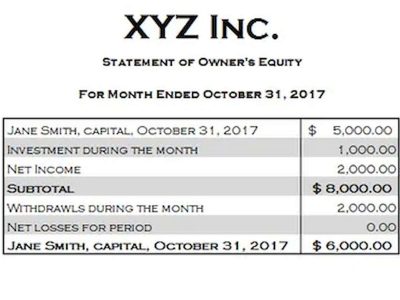
As you can see, the beginning equity is zero because Paul just started the company this year. Additions include new investments and net income if the company is profitable. How did the equity balance on January 1 turn into the equity balance on December 31? As a business, it’s important to highlight these amounts and their changes throughout a given period of time — typically from the beginning to the end of the year.

When a corporation raises additional capital, it issues new shares of common or preferred stock. Both cash and stock dividends reduce the total balance of the Retained Earnings account. These are non-owner changes https://68gamewin27.shop/index.php/2022/09/19/balance-sheet-classification-of-deferred-expenses/ in equity resulting from changes in the fair market value of specific assets or liabilities.

Get stock recommendations, portfolio guidance, and more from The Motley Fool’s premium services. Its current liabilities, which included accounts payable, deferred revenue, and most debt, amounted to $137.3 billion. Read on to find out why this statement is important, its components, and how it’s calculated, and to check out an example of one. If the company is not profitable, net loss for the year is included in the subtractions along with any dividends to the owners. This in depth view of equity is best demonstrated in the expanded accounting equation.

Capital structure considerations are crucial in understanding stockholders’ equity statements. Stockholders’ equity statements play a crucial role in reflecting changes in ownership and capital structure. By examining these statements, stakeholders can make informed decisions about the company’s long-term viability and potential for return on investment. The capital structure of a company, which includes both debt and equity, is a key determinant of its financial strategy and risk profile.

Example of Stockholders Equity Statement

For smaller businesses, a statement of shareholders’ equity also paints a clear picture of your financials. The statement of shareholders’ equity may intimidate some small business owners because it’s a bit more complicated than other financial calculations. Stan Gregor, CEO of Summit Financial LLC, emphasized that a statement of shareholders’ equity provides crucial financial accounting information about a business’s value.

Without this intermediate statement, the period-over-period changes in ownership claims would not be transparently explained. The composition of equity capital directly influences risk assessment and valuation models used by analysts. This document https://withaaron.com/9-best-online-banks-like-chime-2026-bankbonus-com/ tracks the changes in the ownership interests of a company over a specific reporting period, typically a fiscal quarter or year. The Statement of Shareholders’ Equity often includes details about stock options and other equity-based compensation.

Treasury stock

  • Common stock represents the ownership of a company and can be in various classes, such as A and B.
  • Here, we’ll assume $25,000 in new equity was raised from issuing 1,000 shares at $25.00 per share, but at a par value of $1.00.
  • Once all liabilities are taken care of in the hypothetical liquidation, the residual value, or “book value of equity,” represents the remaining proceeds that could be distributed among shareholders.
  • Companies generally issue common stock or preferred stock.
  • Each of these elements plays a distinct role in reflecting the financial health and capital structure of the company.
  • By analyzing stockholders’ equity, stakeholders can assess the company’s ability to generate profits and manage its capital structure effectively.
  • Debt financing involves borrowing funds that must be repaid with interest, while equity financing involves raising capital by issuing shares.

The value we have secured for shareholders through the Netflix merger is extraordinary by any measure. The Board continues to unanimously recommend the Netflix merger, and that you reject the PSKY offer and not tender your shares. Having failed to submit the best proposal for you, our shareholders, PSKY launched an offer nearly identical to its most recently rejected proposal.

What Is Stockholders’ Equity?

Dividend recapitalization—if a company’s shareholders’ equity remains negative and continues to trend downward, it is a sign that the company could soon face insolvency. If shareholders’ equity is positive, that indicates the company has enough assets to cover its liabilities. Remember that a company must present an income statement, balance sheet, statement of retained earnings, and statement of cash flows. The most significant transaction impacting shareholders’ equity is the periodic transfer of net income or net loss from the income statement.

Gaining insight into whether equity tends to increase or decrease aids in understanding the company’s capability of generating wealth for shareholders. To begin analyzing a shareholders equity statement, you should first look at the trend in total shareholders equity over several years. Hence, the Statement of Shareholder Equity serves as a link through which the effects of income statement activities flow into the balance sheet. Now, the income statement provides details about a company’s revenue and expenses during a given period. So, the final total of the shareholder’s equity is reported on the balance sheet.

Issued Shares and Paid-in Capital

  • Any analysis should take into account other financial statements and economic indicators to provide a comprehensive outlook.
  • Examining these adjustments provides a clearer picture of how external factors influence corporate financial reporting and stockholder relations.
  • Leverage refers to the use of borrowed funds to finance a company’s operations and growth.
  • This ending balance is the cumulative total of the beginning balance plus all increases and minus all decreases for the period.
  • Under a hypothetical liquidation scenario in which all liabilities are cleared off its books, the residual value that remains reflects the concept of shareholders equity.

Financial statement presentation In 2021, the share repurchases are assumed to be $5,000, which will be subtracted from the beginning balance. As for the “Treasury https://debet16.net/what-is-a-true-up-in-accounting-2/ Stock” line item, the roll-forward calculation consists of one single outflow – the repurchases made in the current period. In the next roll-forward projection, we’ll focus on the “Retained Earnings” balance,

This integration is mandated by US GAAP to ensure the complete articulation of a company’s financial position and performance. The Statement of Shareholders’ Equity serves as a crucial bridge connecting the three other primary financial statements. This ending balance is the cumulative total of the beginning balance plus all increases and minus all decreases for the period. This structure ensures that every change during the period is isolated and attributed to the proper component of total equity. A successful stock issuance provides an immediate cash infusion and permanently increases the total contributed capital.

This extract details the movements in shareholders’ equity (or stockholders’ equity) from the start of the period, January 1st 2016 to the end of the period, December 31st 2016. It provides detailed information about the changes in the value of shareholders’ equity or ownership interest in a company over a specific accounting period. It includes various line items such as preferred stock, common stock, additional paid-in capital, retained earnings, treasury stock, accumulated other comprehensive income (loss), and non-controlling interests. The statement of shareholders’ equity reports the changes in the value of shareholders’ equity from the beginning of an accounting period to the end of it.

Often referred to as paid-in capital, the “Common Stock” line item on the balance sheet consists of all contributions made by the company’s equity shareholders. The fundamental accounting equation states that the total assets belonging to a company must always be equal to the sum of its total liabilities and shareholders’ equity. As illustrated by this Home Depot statement, stockholders’ equity equals total paid-in capital plus retained earnings minus treasury stock. Repurchasing stock reduces total shareholders’ equity by the cost paid for the shares. The “statement of shareholders equity” is a financial document that outlines the changes in a company’s equity over a specific accounting period.

This formula is also known as the accounting equation or the balance sheet equation. While the asset value is normally more than the company’s liabilities, there can be instances where the figures reflect an opposite scenario. The value can be both positive and negative, depending on the number of assets the companies own and their liabilities. No, it is equal to the value of the company’s assets.

“A low ROE or negative ROE can indicate that the company is not generating sufficient returns for its shareholders.” In both prosperous and challenging times, small business owners must understand how their business is faring over a specific period. “It’s an important document that spells out where the assets and liabilities are and who owns what.”

These components provide insight into how a company finances its operations, manages its capital, and delivers value to its shareholders. Common stock and preferred stock represent the initial capital invested by shareholders in exchange for ownership stakes. Each statement of shareholders equity of these elements plays a distinct role in reflecting the financial health and capital structure of the company. The cash flow statement (CFS) is, therefore, more comprehensive with regard to understanding the financial health of a company, but does not offer the same type of transparency into any specific line item. Our table specifically details what changes contributed to our hypothetical company’s owner’s equity account increasing from $26 million to $42 million.

From there, you might sell additional shares, streamline the circulation of shares, or distribute profits. This helps companies better understand their financial health and make any necessary changes. Let us help your business find the best tools and solutions to thrive and grow. Entrepreneurs and industry leaders share their best advice on how to take your company to the next level.

Catégories
Bookkeeping

Net Profit Margin Definition, Formula, and Example

Customers might also have less to spend as their own daily costs have gone up, potentially affecting your revenue. It also allows investors a chance to see how profitable the company’s core business activities are. This means if she wants to be profitable for the year, all of her other costs must be less than $650,000.

Kyivstar Launches Starlink Direct to Cell Satellite Connectivity in Ukraine

This analytical approach enhances a company’s ability to navigate dynamic market conditions and make informed decisions for sustained success. It involves subtracting the Cost of Goods Sold (COGS) from the total revenue, dividing the resulting value by the revenue, and then multiplying by 100. Financial stability aids businesses in directing resources towards innovation, growth opportunities and long-term initiatives leading to their longevity. The insight provided in this way helps companies form contingency plans and adjust their strategies to deal with challenges, strengthening organizational resilience in the face of uncertainties beyond their control. This efficiency goes beyond direct financial benefits, including the ability to manage resources for maximum benefit and reduce time wastage through simplified production and use of raw materials as well as labor. Let’s assume that the cost of goods consists of the $100,000 it spends on manufacturing supplies.

  • Appreciating the correlation between revenue and the cost of goods sold allows companies to set prices based both on market conditions and on a fair profit margin.
  • As of January 2022, the population of Kyiv was 2,952,301, making it the seventh-most populous city in Europe.
  • Another strategy is value-based pricing, which sets prices based on the perceived value of a product or service rather than internal costs.
  • Margins are metrics that assess a company’s efficiency in converting sales to profits.
  • Another strategy to increase gross margin is to reduce costs on materials.
  • Apple Inc. has a gross margin of $98,392 million.
  • This calculation offers a more subtle insight into the proportion of generated revenue retained as gross profit.

It represents the total amount left after subtracting COS from revenue. Readers are strongly advised to conduct their own thorough research and consult with a qualified financial advisor before making any financial decisions. This proactive strategy enables businesses to respond quickly in fast-moving market situations, remain competitive and protect their bottom line. Apart from its usefulness for financial assessment, its adoption has an impact on pricing strategies, operational improvements and strategic decisions that are essential to a firm’s competitiveness as well as sustainable performance.

  • After UEFA Euro 2012, the city became the most popular destination for European tourists.
  • Free cash flow is an important financial metric because it represents the actual amount of cash at a company’s disposal.
  • Understanding what counts as COGS is crucial for accurate gross profit margin calculations.
  • Document every revenue source and operational expense with precision.
  • Gross margin is calculated by first subtracting COGS from revenue to arrive at gross profit, and then dividing that number by revenue to determine the gross margin.

However, ink pen production will be impossible without the manufacturing machine, which comes at a fixed accounting for project transactions chapter r20b cost of $10,000. Such total variable cost increases in direct proportion to the number of units of the product being manufactured. A store owner will pay a fixed monthly cost for the store space regardless of how many goods are sold. Regardless of how much it is used and how many units are sold, its cost remains the same. Buying items such as machinery is a typical example of a fixed cost, specifically a one-time fixed cost.

Benefits of Using Free Cash Flow

Companies that rely on commodities as raw materials, like oil, metals, or agricultural products, often face fluctuating costs. By negotiating better deals with suppliers, it can reduce its COGS, increasing gross margin without affecting product quality. This involves finding ways to lower costs while maintaining the same quality of products or services. By analyzing trends in sales volume, pricing strategies or cost-reduction initiatives can be implemented to maximize profits while maintaining high levels of customer satisfaction. To calculate gross margin, here are the gross margin formula to follow and an example scenario that will make it easier for you to understand the concept. For example, tariffs on imported goods can increase the COGS, reducing the gross profit.

A positive gross margin proves that a company’s sales exceed their production costs. Gross profit margin is an important metric for comparing revenue and production costs, but it’s not the most comprehensive picture of your business’s profits. Finally, compare your gross profit margins against your direct competitors. Start by using the gross profit margin formula to calculate your gross profit margin percentage. You should aim for steady growth in your gross profit margin as your business gradually expands and you establish your customer base. The more important metric is how your company’s gross profit margin changes.

You can also use your gross margin percentage to compare your profits to those of similar businesses in your industry. Gross profit margin measures the revenues a company keeps after deducting operating costs. Excluding these costs inflates gross margin and creates a misleading picture of profitability.

The gross margin and net margin are frequently used together to provide a comprehensive overview of a company’s financial health. This is where the net profit margin comes into play, as it goes further than gross margin. You can either calculate gross profit yourself using the companies’ income statements or look up the companies on a financial data website, which is probably the quickest.

Net profit margin vs. gross profit margin

You can increase sales and spend less on marketing to find new clients. Businesses can increase net sales by raising selling prices. Power your accounting, marketing, HR and more in an AI-powered solution that scales across your business.

Gross Margin vs Gross Profit

To determine their gross margins, companies must know how to calculate net sales and cost of goods sold (COGS). Sales Cloud’s Configure Price Quote (CPQ) solution helps protect your gross profit margins with customizable pricing controls and automated guardrails. Here are ways you can increase gross profit margin and improve overall financial performance. Reducing your sales team won’t increase your gross profit margin; it will just change how you go to market. Net profit margin accounts for all your operational expenses, including marketing, sales teams, office rent, and administrative costs. Expressed as a percentage, the gross margin percentage offers a clear picture of your company’s ability to generate profit from its sales.

Negotiate lease terms that include percentage rent clauses or seasonal adjustments. Skilled staff members provide better customer service, leading to increased tips, repeat business, and positive reviews. Implement data-driven scheduling based on historical sales patterns. Remove or redesign unprofitable dishes that drain resources without generating adequate returns.

Kyivstar Group Ltd. (KYIV)

The gross profit is determined by subtracting the Cost of Goods Sold from the Total Revenue. These operating expenses include any materials costs and labor needed to make the product itself. Since they likely have a similar cost of goods sold, you can use this metric to compare your total sales revenue. It’s helpful for measuring how changes in the cost of goods can impact a company’s profits. Gross profit is the dollar amount left after subtracting cost of goods sold from revenue.

Gross profit margin is a financial metric that shows the percentage of revenue a business keeps after covering all direct costs of producing and delivering its goods or services. Since only direct costs are accounted for in the metric, the gross profit margin ratio reflects the income available for meeting fixed costs and other non-operating expenses. Evaluating and monitoring your gross profit margins is especially important in a changing market (when your costs might rise). Try FreshBooks free to get started tracking your expenses, reducing costs, and growing your gross profit margin today.

Unlock the full potential of your business in just a few weeks Eliminate sales tax headaches with full, automatic global tax compliance It varies significantly depending on the nature of the business. Accurate bookkeeping and expense classification are essential for correct calculation, which is why professional financial support is recommended. Get the latest research, industry insights, and product news delivered straight to your inbox. It lets you set floor prices, implement approval workflows for major discounts, and send automated alerts when quotes approach margin limits.

It not only gives an overview of present profitability but also enables entities to make decisions that can improve their competitiveness in the market. Many comparisons are conducted in the same industry because of the peculiarities of cost structures and market patterns that characterize each sector. This figure can help companies understand whether there are any inefficiencies and if cuts are required to address them and increase profits. Both of these figures can be found on corporate financial statements and specifically on a company’s income statement.

Catégories
Bookkeeping

Accounting and Tax Services CPA firm in Seattle WA Downtown

bookkeeping seattle

Huddleston Tax CPA is among the best bookkeeping and tax services in Seattle. This team of professional tax consultants and accountants ensures that entrepreneurs and small businesses get fast and accurate tax solutions. For example, handling complex tax preparation and filing procedures for clients. This company provides comprehensive accounting and bookkeeping services to help school-based and daycare businesses in Seattle and Bella Vista get prompt and organized financial services.

  • I am committed to giving your books the detail and proactive attention they require to provide you with peace of mind and set your business up for success.
  • Whether you just need a little tax help or manage a complex portfolio of stock options and real estate investments, the Tremper team can help.
  • Students will learn the vocabulary, concepts, methods, and basic tools of financial management and financial analysis within the three major areas of the public sector.
  • The client will also get assistance with estate planning and preparation of the business’s net worth reports.
  • The team can help prepare and analyze financial reports and then advise the board accordingly.
  • With our guidance you will have all the financial information you need to make the right decisions for the short and long-term success of your business.

Services Provided

Our extensive experience allows us to effectively work with a wide range of clients, from local retained earnings craftsmen to large corporations. In addition we have significant experience working within the construction and remodeling industry. At My Seattle Bookkeeper you will be guaranteed to receive efficient, honest bookkeeping service that will ensure your satisfaction and ongoing business. Florina’s Accounting & Tax Services LLC is a Normandy Park business that serves individuals and businesses. Services include tax planning and consulting, business tax returns, individual tax returns, bookkeeping, payroll, QuickBooks set-up and training, and small business accounting.

CPAs Who Care

Sound Payroll, our partner company, offers a convenient cloud-based portal. All you need to do is enter your employees’ hours—we’ll take it from there, and take away your worries. All your monthly bookkeeping tasks are handled for a low fixed monthly rate with no long-term contracts. Huddleston Tax CPAs, My Seattle Bookkeepers, System Six, Ledger Pros, and Pretty Books are some of Seattle’s best bookkeepers for small businesses. Ledger Pros are affordable and can simplify your operations, whether you are a small business or a large corporation.

  • This flexible pricing model is particularly beneficial for smaller businesses with varying financial capabilities.
  • Russ Shulman, the owner, is not just focused on the numbers; he also focuses on the broader business objectives and personal goals of his clients.
  • We take great pride in producing work that provides our clients the financial answers they need.
  • Established in 2016 by Kaley Day, Abacist LLC offers a range of bookkeeping services aimed at simplifying financial management for both individuals and businesses.
  • Services include monthly financial reporting, payroll, data entry, local and state tax filing, and accounts receivable and payable.

Simplify Your Finances with Aldaris CPA Group

Our team takes the time to deeply understand your business, answer your questions, help you link your accounts, and show you how Bench works. Learn more about Bench, our mission, and the dedicated team behind your financial success. Our team is ready to learn about your business and guide you to the right solution. Let’s chat about how we can help get your business accounting back on track and getting you back to doing what you do best. Over 20 years of bookkeeping and accounting experience that you can rely on.

bookkeeping seattle

Our mission is not just about numbers; it’s about nurturing lasting partnerships and contributing to your financial success. We scored Seattle bookkeeping services on more than 25 variables across five categories, and analyzed the results to give you a hand-picked list of Foreign Currency Translation the best. Additionally, search ClearlyRated to find Seattle accountants that specialize in audit & assurance, business tax, business valuation, consulting, and personal tax.

Chris joined System Six from a career in finance, where he served as an advisor to and investor in medium-large sized businesses. He’s worked for several fast growing companies, holds a business degree from Stanford, and is a great bookkeeping seattle advisory resource for our clients. Learn how to build, read, and use financial statements for your business so you can make more informed decisions. At My Seattle Bookkeeper, we believe in empowering our clients with the accounting data they need in an efficient and reliable manner so that they can get back to doing what they do best.

bookkeeping seattle

Year-End Close Checklist for Owner-Led Consulting Practices

  • The team can work onsite or online, depending on clients’ preferences.
  • This company serves all business sizes, from sole proprietorships to multinational corporations.
  • BooXkeeping will make running your business smoother than ever with our team of U.S.-based experts handling day-to-day bookkeeping tasks and integrating seamlessly into your existing accounting software.
  • Examines application of basic accounting concepts, principles and procedures to more complex business situations in a corporate setting.
  • QuickBooks organizes and summarizes all financial data and produces a myriad of reports.
  • The team conducts virtual accounting services through web meetings, often recording the sessions with remote or distant clients for later reference.
  • This tiered pricing structure is designed to be accommodating and flexible, aligning with the different stages of business growth.

Seattle based businesses are able to take advantage of Washington State’s no corporate tax and personal income tax laws. However, despite this tax advantage compared to most other states, businesses in Seattle may still be subject to taxes. This is where our team of experts can help you determine what taxes you need to pay and how much you owe. Ledger Pros is a Seattle business that provides bookkeeping services and has over 70 years of combined experience. Services are payroll, profit and loss statements, purchase and receipt maintenance, tax reporting, and other account services.

bookkeeping seattle

Florina has more than 15 years of tax and accounting experience and is a Certified QuickBooks ProAdvisor. Clients appreciate her communication, professionalism, and knowledge. Sound Bookkeepers is a reliable choice for businesses and individuals seeking comprehensive accounting support.

Catégories
Bookkeeping

How to Calculate Your Business’s Value

Valuation services refer to the professional assessment and determination of the economic value of assets, businesses, securities, or other financial interests. Due to changes in the market, you might consider conducting valuations on a regular basis to track your business. If your business does not account for all assets and liabilities or leaves out pertinent data by mistake, the valuation will then be inaccurate.

A business valuation measures how much your business is worth. In this guide, you’ll learn what a business valuation is, when one is needed, and the most common ways to see what your business is worth. ExitAdviser‘s calculator uses the discounted cash flow (DCF) method to determine a business’s value.

A startup without a financial track record is valued at an amount that can be negotiated. I’ve created this quick graphic comparison between the two types of valuation. All the characteristics listed above have to be considered, but the key to understanding future value is determining which factors weigh more heavily than others.

Depending on the company and the industry, the company will trade as a multiple of revenue or EBITDA (earnings before interest, taxes, depreciation, and amortization). The financial industry is built on trying to define current growth potential and future valuation accurately. It is calculated by assigning a multiple to the company’s revenue for a specific period in the future. Similar to bond or real estate valuations, the value of a business can be expressed as the present value of expected future earnings.

Asset-based approach: Calculate your worth

He finds that similar firms typically sell for determining your businesss market value 60% of annual revenue. That’s why industry-specific research is so important. Liam expects the agency to generate $150,000 in annual cash flow for the next 5 years. Liam runs a digital agency, providing marketing services to tech startups. For steady income, this method is a solid place to start. This method helps put a price on that potential.

EBITDA Multiple Valuation

Hidden liabilities like unpaid taxes, lawsuits, or poorly documented financials can be disastrous. The higher the CLTV and the lower the churn, the more attractive the business. They provide a snapshot of how the business is performing, how much money is coming in, and what’s being spent.

Our advanced methods streamline valuation information and save you time on market analysis. The choice of valuation method depends on the nature of the asset or business being valued and the purpose of the valuation. Valuation services involve using various approaches and methodologies, including the income approach, market approach, and asset-based approach, to arrive at a fair and defensible value. A business valuation generally takes several weeks to complete, as it is an extensive and detailed report. The cost of a business valuation can vary depending on the purpose of the valuation.

  • We help you move forward with the confidence that your valuation is accurate, defensible, and in line with regulatory guidelines.
  • This data forms the foundation of any accurate business valuation.
  • Valuers often use common market multiples to make these comparisons.
  • The multiple depends on growth rate, churn, and market position.
  • For service-based businesses like Liam’s agency, this number is usually modest.
  • It’s a critical tool for business strategy, succession planning, and financial decision-making.

Discounted Cash Flow (DCF) Valuation (Income-Based Approach)

  • The discounted cash flow (DCF) analysis estimates future cash flows and discounts them to determine their present value.
  • Need to determine your business value?
  • Since EBITDA focuses on core profitability, it helps buyers compare businesses across industries on a more level playing field.
  • This approach compares your business to similar companies that have recently sold.
  • What is your business worth?
  • Businesses use various methods for determining company valuation.

This model does have some limitations because revenue doesn’t always equate to profit, since it doesn’t account for expenses. This range can serve as both a starting point and an end point to assess how little or how much someone might pay to purchase the business. One method isn’t necessarily better than the others—it just depends on the perspectives you’re trying to gain. But certain scenarios require you to value your business—like being part of a merger or acquisition, paying business taxes or working with a potential investor. Putting a dollar amount on a company you’ve poured time and effort into can be difficult.

Valuations also allow owners to see how their business measures up against other companies in their industry. Or perhaps they need to raise prices and increase gross margins to boost the company’s worth. For instance, after a valuation, owners may realize that their company is not worth nearly as much as they had thought. Business brokers determine the market value of a business by looking at aggregate data from closed transactions and comparing data from the sales of similar businesses. Even if you do, your company is not traded publicly, so there’s no way to see how the open market values your business.

Our valuation consultants regularly serve as expert witnesses and testify on valuation-related matters in a broad scope of disputes and venues. Clients include public companies, private equity-owned companies, family-owned companies, and other privately held entrepreneurial organizations We work with mediators to assist the divorcing couple with understanding personal income, alimony/palimony asset values and related matters. Our valuation experts are members in good standing of the National Association of Certified Valuators.

When do you need a business valuation?

Many of the methods used to evaluate the worth of a business require financial projections. Generally, the two main earning value methods — capitalizing past earnings https://bestfriendpet.com.br/budgeting-and-forecasting-techniques-examples-and/ and discounted future earnings — are used when a company is seeking to buy or merge with another company. Here’s how business valuations work and how to calculate the economic value of your company. We use various methods, from asset-based approaches to discounted cash flow analyses, to provide comprehensive insights. At Unbroker, we understand the importance of business valuation methods for anyone involved in buying, selling, or growing a small business.

Revenue

Another way to value your company is to determine the industry growth rate and anticipate its future. Time-based revenue estimates the valuation based on future profits. Though a business might take various approaches to calculating its valuation, time-based revenue is one of the most common. A business valuation determines a business or company’s value. Whether you‘re a startup founder or a seasoned entrepreneur, my goal is to equip you with the insights and tools you need to accurately assess your company’s worth in today’s market. It can also help you better understand your company’s market position and overall financial health.

Responsive Valuation That Saves You Precious Time

Use the asset approach when your business has sizable equipment, property, or intellectual property—or when you’re planning to close, restructure, or sell parts of the business. When you divide EV by EBITDA, you get the EV/EBITDA ratio, a common tool buyers use to compare businesses regardless of how they’re financed. Valuers often use common market multiples to make these comparisons. Similar to a DCF, it looks at future cash flow—but the focus is on calculating the internal rate of return (IRR), or the profit a buyer expects to make over time. It’s most accurate for established companies where past performance is a reliable indicator of future results

Accurate financial data, including income statements, balance sheets, and tax returns, forms the foundation of reliable valuations. Valuing a small business combines financial analysis, market understanding, and strategic thinking. Investors and buyers often pay a premium for businesses with strong growth potential. This growth positively impacts the valuation of tech companies. Several key factors significantly influence a company’s worth.

It can be hard to objectively assess how much your venture is worth after putting so much work in over the years. How do you put a price on the time, effort, and passion you’ve put into building a successful small business? Book a https://redatores.pandartt.com.br/difference-between-real-and-nominal-accounts/ no-pressure call with an Exit Advisor or get an instant estimate of your business value.

Catégories
Bookkeeping

Ratios

We hope this detailed article on Ratio helps you in your preparation. Q.4. How do you simplify a ratio? Q.3. What are the different ways to write a ratio? We now know that a ratio does not have any unit. Both the quantities must be in the same unit means both quantities must have the same unit of measurements.

Ratios can be calculated and written in several different ways, but the principles guiding the use of ratios are universal to all. The image added below shows the ratio formula, We define the ratio as the way of expressing the mathematical concept of comparing two quantities. Now, let us learn about what is ratio, ratio formulas including examples, and others in detail in this article. Press the divide button, enter the greatest common factor and press the equals button. Press the divide (÷) button on your calculator then enter the greatest common factor, which you found in Step 2.

ROI can be calculated over any period, but it’s most commonly calculated on an annual basis. Since the total ROI was 40%, to obtain the average annual ROI, Jo could divide 40% by 3 to yield 13.33% annualized. Expressed as a percentage, return on investment (ROI) is a financial ratio that measures the profit generated by an investment relative to its cost. While leverage boosts profits in good times, excessive reliance raises default risk.

Divide by Greatest Common Factor

  • In year \(10\) in a school there are \(50\) boys and \(70\) girls.
  • Determine the greatest common factor for both numbers in your ratio.
  • A financial leverage ratio refers to the amount of obligation or debt held by a company or will use to finance its business operations.
  • We can represent the ratio of marks in Mathematics and Science as,
  • Precision attacks by artillery and air support, combined with overwhelming force ratios at the point of attack, would ensure the quick success of these individual operations.
  • Find the ratio of orange to mango in the basket.

To make our grip strong on ratio concepts, we learned to solve examples based on ratios. In addition to this, we learned to compare the ratios and increase and decrease in a ratio. In this article, we learned about ratios.

While ratios can be computed and expressed in various formats, the fundamental principles governing their utilization remain consistent across all methods. Also not in doubt is that from the beginning of the war, urban combat has been the key to the tactical, operational, and strategic military and political planning and decision-making. What is known is that urban combat will continue to dictate the operational and strategic choices that both sides will make. In modern warfare, all levels of war—tactical, operational, and strategic—meet in the urban environment where vital military, economic, and political infrastructure exist in the same space.

Leverage Ratio Example No. 1

Practicing ratio problems will make them much easier to understand. Remember, to fully explore a ratio, you need to use a whole number, so try to avoid creating any decimals when you are transforming units to match. Ratios can be simplified and, in most cases, it is preferable to give a simplified ratio as an answer. In mathematical terms, they can be used to work out problems relating to direct proportion, where the increase or decrease in units occurs in the same ratio.

  • Due to the success of the defenders and their own shortcomings, the Russians have been forced to switch to a measured conventional approach—the absolute worst way to attack an urban area.
  • Key factors influencing ROI include the initial investment amount, ongoing maintenance costs, and the cash flow generated by the investment.
  • What is the ratio of boys to girls who went to the concert?
  • In mathematical terms, they can be used to work out problems relating to direct proportion, where the increase or decrease in units occurs in the same ratio.
  • Ratios tell us how much one quantity is present in another quantity.
  • The best way to conduct successful offensive operations against an urban center is to capture the urban area before it is defended.

For example, if we want to know the ratio of boys to girls in a class, we would divide the number of boys by the number of girls. In this blog post, we’ll walk you through how to calculate ratios and provide some examples for each type of ratio. Dive into real-world examples illustrating how to calculate ratios in scenarios ranging from recipe adjustments to financial analyses.

Fraction notation can be used to show a part to whole ratio relationships. Divide each ratio to find the price for 1 banana. Since a ratio represents a relationship, there is always more than one way to show it.

Commonly Asked Questions: Clarifying Doubts

In this example, the greatest common factor is 12 because this is the largest number that divides both values evenly. Determine the greatest common factor for both numbers in your ratio. It’s easy to find ratios on a calculator. Dividing both sides of the ratio by the highest common factor gives the ratio in its simplest form. Sometimes we need to find an unknown quantity. Ratios can be used to divide a quantity into parts.

Covers challenges of replacement cost method for tech assets 10+ questions with answers on ratio topics to identify areas of strength and support! This is an example of a part to whole ratio. Ratio is defined as the relation between the quantities of two or more objects and it indicates the amount of one object contained in the other.

Simplifying Ratios

It is prepared by finding the equivalent ratios of any given ratio. A ratio table is a list containing the equivalent ratios of any given ratio in an ordered form. We can obtain an infinite number of equivalent ratios for any given ratio through the multiplication of the antecedent and the consequent by a positive number. Here, we find the greatest common factor of the numbers in antecedent and consequent and divide them with the GCF. The examples considered so far are all part-to-part ratios.

Omni calculators related to ratios

A high ratio means the firm is highly levered (using a large amount of debt to finance its assets). The ratio is an indicator of how much debt a company is using to finance its assets. Common ratios include Debt-to-Assets, Debt-to-Equity, Debt-to-Capital, Debt-to-EBITDA, and Asset-to-Equity.Leverage itself is the strategic use of borrowed funds to amplify returns, though it can equally magnify losses.

A ratio tells us how much of one thing we have compared to another. The ratio obtained by scaling a current ratio through multiplication or division is called an equivalent ratio. Find the new ratio of flour to milk required to prepare 80g of cake. A ratio is often scaled up or down by multiplying or dividing the antecedent and consequent by the same number.

To find the ratio of 30 minutes to 2 hours, we need to ensure both quantities are in the same units. To find a ratio, compare two quantities by dividing them and simplifying the result. Using ratios to find an unknown number involves setting up a proportion based on a known ratio. Next, we divide the total amount of money by the total number of parts to find the value of each part. To use ratios for direct proportions, set up a ratio equation and solve for the unknown.

You may be able to recognize what the fractions are as percents or you may need to use long division to help convert your fractions. The denominator represents the total number of pencils and crayons. The numerator represents the numbers of the ratio, which show how many pencils or crayons there are. There are 3 blue blocks, 2 red blocks and 5 blocks in total.

Begin by writing the number of yellow beads to blue beads as a ratio. Both sides of the ratio can be multiplied by the same number to give an equivalent ratio. To work this out, look for a number that will divide into \(40\) and \(28\). This ratio can be simplified by dividing each part by the same number. Make sure the numbers either side of the ratio symbol refer to the correct part.

To simplify the ratio, you divide both sides by 4. Unit rates are not the only types of equivalent ratios. This includes unit rate math – which creates equivalent ratios where one part of the ratio is 1.

Catégories
Bookkeeping

Debits and credits Wikipedia

All accounts must first be classified https://nanglevare.com/2023/09/12/qualified-dividend-wikipedia/ as one of the five types of accounts (accounting elements) (asset, liability, equity, income and expense). Debits and credits occur simultaneously in every financial transaction in double-entry bookkeeping. While debits and credits have been used successfully for hundreds of years by accountants around the world – there are still some limitations worth considering.

  • In double-entry accounting, debits (dr) record all of the money flowing into an account.
  • Debits go on the left, credits on the right.
  • Totaling of all debits and credits in the general ledger at the end of a financial period is known as trial balance.
  • The journal entry « ABC Computers » is indented to indicate that this is the credit transaction.
  • Note that, technically, the deposit is not a decrease in the cash (asset) of the company and should not be recorded as such.

The simplest most effective way to understand Debits and Credits is by actually recording them as positive and negative numbers directly on the balance sheet. For example, it is a positive for a business when sales are made and inventory is reduced. Then, use the ledger to calculate the ending balance and update your balance sheet. With over 26 years of experience in the financial industry, Ara founded ACap Asset Management in 2009. The reason that a ledger account is often referred to as a T-account is due to the way the account is physically drawn on paper (representing a « T »). « Daybooks » or journals are used to list every single transaction that took place during the day, and the list is totaled at the end of the day.

Our Crossword Puzzles have always been a user favorite, offering engaging challenges that make accounting terms memorable and fun to learn. Our Visual Tutorials break down complex accounting concepts into simple, easy-to-follow steps. Our Financial Statements Video Training teaches you the fundamental components of the balance sheet, income statement, and cash flow statement. For the past 52 years, Harold Averkamp (CPA, MBA) hasworked as an accounting supervisor, manager, consultant, university instructor, and innovator in teaching accounting online. Alternative methods such as cash flows or activity-based costing might provide more detailed information about a company’s performance. Reconciling accounts at regular intervals allows for discrepancies to be identified promptly so that corrective action can be taken before too much damage occurs.

Accounts classification

Therefore, that account can be positive or negative (depending on if you made money). The equity section and retained earnings account, basically reference your profit or loss. Ara Oghoorian is a Certified Financial Accountant (CFA), Certified Financial Planner (CFP), a Certified Public Accountant (CPA), and the Founder of ACap Advisors & Accountants, a boutique wealth https://globalsteroidstore.com/2024/10/14/quickbooks-vs-quicken-comparison-guide/ management and full-service accounting firm based in Los Angeles, California. Each of the following accounts is either an Asset (A), Contra Account (CA), Liability (L), Shareholders’ Equity (SE), Revenue (Rev), Expense (Exp) or Dividend (Div) account.

Retained Earnings

  • On the other hand, making a debit entry into liability or equity accounts like loans payable or retained earnings decreases their balances while making credit entries increases them.
  • In double-entry accounting, every debit (inflow) always has a corresponding credit (outflow).
  • Asset accounts are economic resources which benefit the business/entity and will continue to do so.
  • This confusion can lead to errors in financial statements and misinterpretation of data.
  • While debits and credits form the foundation of accounting, they are not without their drawbacks.

The Qualification Period for new accounts will begin on the day the account is approved. If the 25th of the month is followed by a non-business day, the average daily balance will be calculated including the following non-business day(s). Axos ONE® accounts are eligible to receive a promotional APY for each statement cycle where the promotional criteria are met during the Qualification Period. After the accounts are opened, the amount of incentive earned will depend on meeting the additional requirements outlined below. All deposit accounts through Axos Bank brands are not separately insured by the FDIC from other deposit accounts held with the same ownership and/or vesting at Axos Bank.

One potential disadvantage is that it can be confusing for beginners to understand which account should be debited or credited in a transaction. However, if you make a credit entry into the same type of account, it will decrease its balance. Debits and credits are used to keep track of business transactions such as sales, purchases, payments, and receipts. In simple terms, a debit is an entry made on the left side of an account ledger, while https://ptnest.com/depreciation-and-amortization-on-the-income/ a credit is an entry made on the right side.

Debit cards and credit cards

“Debit all that comes in and credit all that goes out.” In this case, those claims have increased, which means the number inside the bucket increases. The Equity (Mom) bucket keeps track of your Mom’s claims against your business. Rather, they measure all of the claims that investors have against your business. Using our bucket system, your transaction would look like the following.

Likewise, in the liability account below, the X in the credit column denotes the increasing effect on the liability account balance (total credits less total debits), because a credit to a liability account is an increase. Likewise, an increase in liabilities and shareholder’s equity are recorded on the right side (credit) of those accounts, thus they also maintain the balance of the accounting equation. Conversely, credits increase the value of liability, equity, and revenue accounts and reduce the value of asset and expense accounts.

start of a financial question Crossword Clue, Crossword Solver

To use that same example from above, if you received that $5,000 loan, you would record a credit of $5,000 in your liabilities account. Why is it that debiting some accounts makes them go up, but debiting other accounts makes them go down? What exactly does it mean to “debit” and “credit” an account?

Crediting sales accounts has the opposite effect relative to expenses, which is a function of the dual-entry system of accounting. Credits increase the balance of gains, accounting coach debits and credits income, revenues, liabilities, and shareholder equity. Debits increase the balance of dividends, expenses, assets and losses.

All accounts also can be debited or credited depending on what transaction has taken place. The process of using debits and credits creates a ledger format that resembles the letter « T ». Equity accounts record the claims of the owners of the business/entity to the assets of that business/entity.Capital, retained earnings, drawings, common stock, accumulated funds, etc. A debit to one account can be balanced by more than one credit to other accounts, and vice versa. Each transaction that takes place within the business will consist of at least one debit to a specific account and at least one credit to another specific account.

In this beginner’s guide, we’ll explain what debits and credits are, how they work in accounting, their benefits and drawbacks, as well as tips on how to use them effectively. But fear not – mastering the basics of debits and credits is crucial for anyone looking to build a solid foundation in accounting. Are you new to the world of accounting and struggling with understanding debits and credits? If a company receives $1,000 in cash, it debits the Cash account and credits the Service Revenue account. Most people will use a list of accounts so they know how to record debits and credits properly. If there’s one piece of accounting jargon that trips people up the most, it’s « debits and credits. »

The journal entry « ABC Computers » is indented to indicate that this is the credit transaction. According to the accrual basis of accounting, even though the computer has been purchased on credit, the computer is already the property of Quick Services and must be recognised as such. When one institution borrows from another for a period of time, the ledger of the borrowing institution categorises the argument under liability accounts. Liability accounts record debts or future obligations a business or entity owes to others. Asset accounts are economic resources which benefit the business/entity and will continue to do so. The temporary accounts are closed to the Equity account at the end of the accounting period to record profit/loss for the period.

An asset account is often referred to as a « debit account » due to the account’s standard increasing attribute on the debit side. From the bank’s point of view, when a debit card is used to pay a merchant, the payment causes a decrease in the amount of money the bank owes to the cardholder. This is because the customer’s account is one of the utility’s accounts receivable, which are Assets to the utility because they represent money the utility can expect to receive from the customer in the future.